One message came through again and again. AI has made building a company easier, which makes everything else harder: how you win customers, how you use capital and how you lead.

Winning customers
1. Your moat is what a competitor can’t copy with AI.
For years, software companies relied on a few defences: customers found it painful to switch, being first to market gave a head start, and integrations made a product hard to remove. AI is wearing all three down. Work that once took a year to rebuild or migrate can now take weeks or less.
What still holds is harder to copy: trust, regulation, physical assets, and data nobody else has. The strongest version links that data to a result customers pay for, such as lower costs or lower risk. A simple test came out of the sessions: if your largest customer left this quarter, what would leaving cost them in dollars and retraining? If the honest answer is “not much”, the moat isn’t there yet.

2. AI is becoming the front door to buying.
The buying journey used to start with a search and a website. Increasingly it starts with a question to ChatGPT, Perplexity or Google’s AI answers, and the shortlist is set before a buyer visits anyone’s site.
What those tools say about a company comes mostly from other places: reviews, forums, videos and specialist publications. A company’s own website is only a small part of it.
The practical response is to decide what you want AI tools to say about you, publish specific pages with facts the models don’t already have, and earn mentions from sources they trust. The answers change quickly, so check them monthly. The next step is already arriving: AI agents that shortlist and buy on someone’s behalf. It is worth asking whether an agent could book, trial or buy from you without a human involved.

Using capital
3. Spending capital well matters more than raising it.
Raising money gets most of the attention. In a tighter market, the harder question is whether the money gets you somewhere.
The test put to the room was blunt: if your next raise disappeared, could your current plan reach breakeven, measured on cash rather than profit? Many founders could not say yes with confidence.
The discipline that helps is planning backwards. Decide what the business must look like at its next milestone, whether that is a raise, profitability or an exit. Then work back to 18 months, 12 months, six months and this week. That gives founders and investors a shared view of what the capital is for, before the term sheet rather than after it.

Leading
4. You can lead work you’ve never done.
As companies grow, founders can end up leading sales, marketing, finance and product, often without ever having run those functions themselves. That can leave them unsure how to judge the work. The answer offered at Expedition26 was to “taste the food”. A restaurant owner who can’t cook can still order a dish and say it isn’t good enough. Leaders can do the same with what their customers experience.
In practice, that means starting each week’s leadership meeting by reviewing real output: recorded sales calls, the emails a new lead receives, the website and the sign-up flow. Looking at it as a customer would keeps the conversation on quality rather than turning it into an audit of one team. When something is clearly broken, the leader goes deep for a period, defines what good looks like, then hands it back.
This applies well beyond startups. Anyone leading functions they didn’t come up through can use it.

5. A founder’s state of mind is a business input.
Founders often treat stress, sleep and mindset as private matters. The view at Expedition26 was that they belong in the business plan.
Teams read a leader’s state before they hear the words, and they follow the calmest person in the room. Calm is a skill that can be trained. Under stress, the reasoning part of the brain steps back, so thinking your way to calm rarely works. The reset starts with the body: slow the breath, with a longer breath out than in, and bring attention back to the room.
Research shared at the event points the same way. A founder’s psychological resources, such as hope, confidence, resilience and optimism, affect how well the capital they raise turns into results. Backing a founder well means paying attention to this, not only to the numbers.

What ties it together
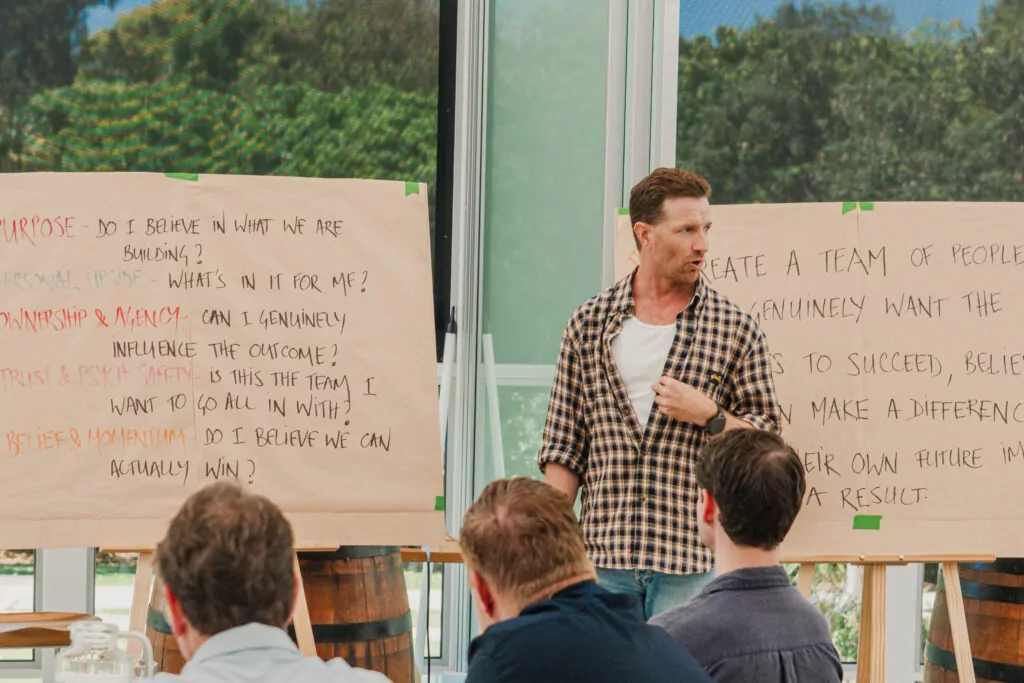
None of these ideas came from theory. They came from founders and experts who have already been through it, sharing what they learned with the founders coming next. That kind of exchange is what we want to see more of in this part of the world.



Canaccord Genuity — Technology markets: thinking beyond the next funding round

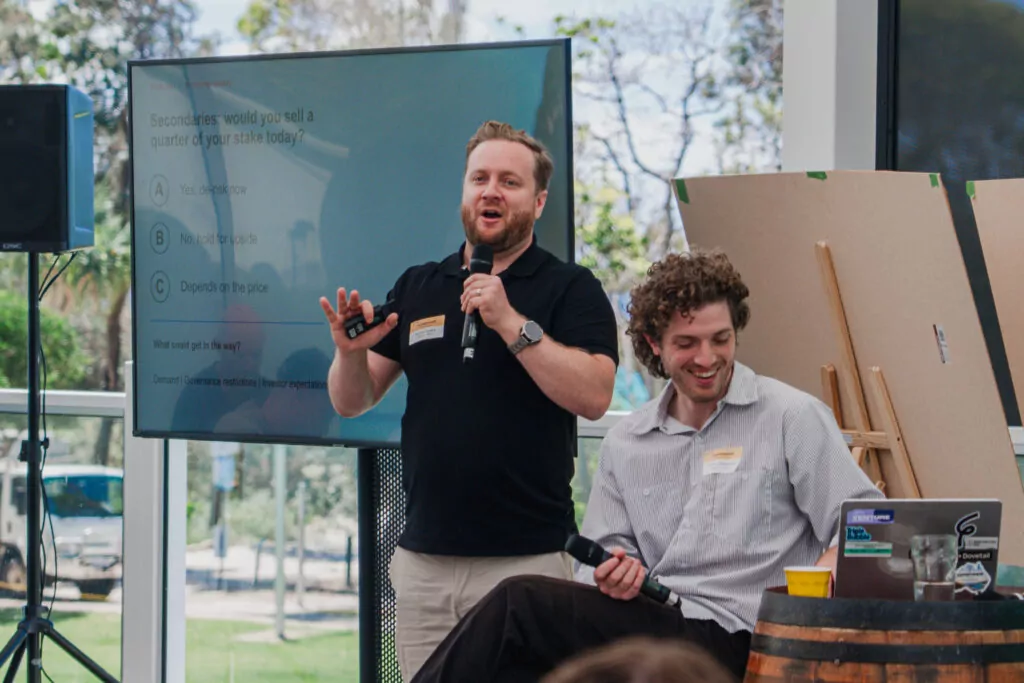
Technology markets – thinking beyond the next funding round Canaccord were very pleased to support the Expedition session in Kingscliff, with Sam Forman and Owen Humphrey’s hosting a session talking about the state of the markets, the sector and a forecast for the future. While market conditions remain challenging, the Australian capital markets continue to provide an attractive source of funding and investor liquidity for high-quality technology businesses. For founders, this reinforces the importance of thinking about capital strategy early, building investor relationships and considering potential funding or exit pathways as part of medium and long-term planning.
The discussion followed Canaccord Genuity’s recent Tech Conference in Sydney, which brought together leading technology companies and institutional investors for a full day of company meetings and sector discussions. Key themes included AI infrastructure and its impact on technology businesses, alongside the rapidly evolving drones and defence technology sector. The AI Impact & Infrastructure panel featured NVIDIA, SHARON AI & Blackbird Ventures, while the Drone & Defence Technology panel featured Ian Langford, Codan, Electro Optic Systems, Innovaero and DroneShield. Across both events, one message stood out: high-quality businesses with strong fundamentals and compelling growth stories continue to attract investor engagement, even in more challenging markets. For entrepreneurs and founders, preparation matters. Understanding what investors are looking for, building relationships ahead of time and having a clear view of your longer-term capital and exit strategy can put a business in a much stronger position when the right opportunity arises.