Venture Down Under Reflections from the Innovation Bay Team
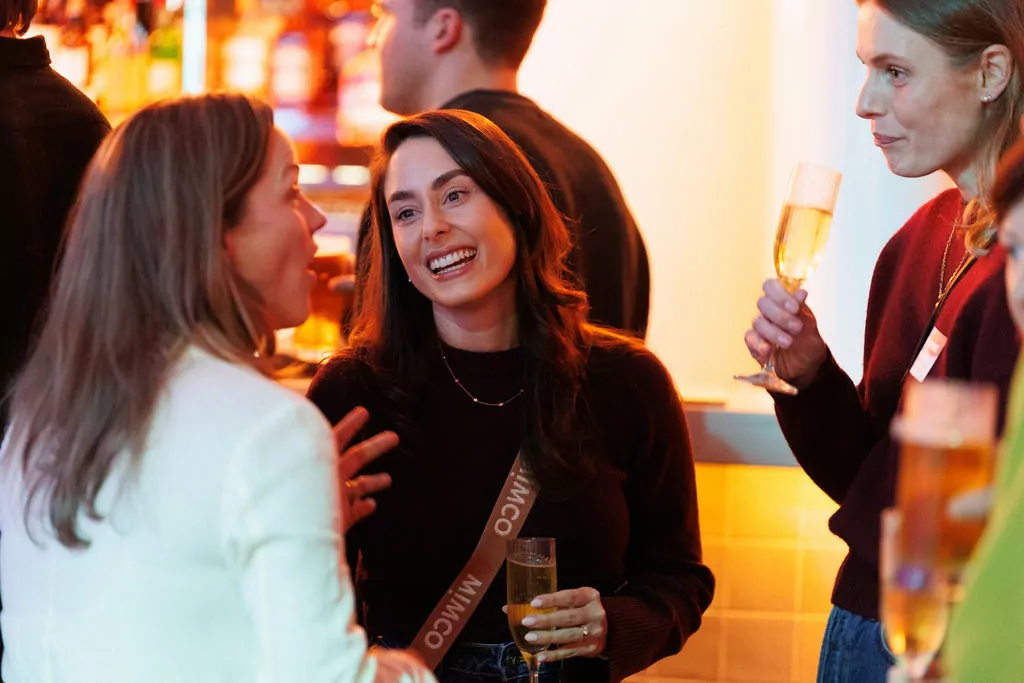
After three days of big ideas, candid conversations and plenty of debate at Venture Down Under, the Innovation Bay team came away with a lot to reflect on. From Australia’s ambition on the global stage and the future of AI, to founder support, investment decision-making and the strength of our venture community, different sessions resonated with each of us for different reasons. Here are some of the ideas and moments that stayed with our team after VDU.
Phaedon Stough, Co-Founder & CEO:
Larry Marshall opened VDU by challenging us to stop asking which future is most likely. Ask what’s inevitable, find the bottleneck holding it up, then ask whether Australia can clear it better than anyone else. If we can, don’t build a company, build an industry.
That theme carried through VDU. Anton van den Hengel argued our shortage is ambition, not talent or capital. Nat Cook asked why we don’t support founders as deliberately as our athletes. Steve Allan reminded us that conviction has to be your own.
What makes me optimistic is the room itself. We already have a national community of founders, investors and operators choosing to share what they know, back each other and grow more ambitious together.
“No matter how brilliant your mind or strategy, if you’re playing a solo game, you’ll always lose out to a team.” — Reid Hoffman
Australia’s team is already assembled. It starts here.
Unlocking & Keeping Founders in Australia – A Panel with Rick Baker
Saachi Arora, Founder Experience Manager:
Moderated by Rick Baker, the panel centred on two connected themes: unlocking founders and then keeping them in Australia. The easy path is sending every founder to San Francisco. The harder and more valuable work is giving them a reason to stay, which means cultivating community, deepening the talent pool, making capital accessible, and breaking past the tall poppy syndrome that still quietly shapes how Australian founders talk about ambition.
Being able to hear insights from the room on what the Australian ecosystem actually lacks was genuinely eye-opening and emphasised the work required to keep founders in Australia.
Matt Lieberman:
Steve Allan’s speech gave us a practical look at how venture capital investors make decisions. He presented two live deals and asked the audience to decide whether they would invest and explain their reasoning.
The session showed how investors with similar theses can assess the same opportunity differently. It also highlighted the risk of groupthink in venture capital. As influential people shared their opinions, others began shifting their own views.
This showed how momentum and social proof can shape decisions, causing investors to follow the group rather than rely on independent analysis. Beyond what was the correct answer in these scenarios, this highlighted how decision making and social trends impact investments in venture capital.
Ryan Burns, Head of Venture Capital:
When Prof. Anton van den Hengel opened our AI Convergence Lab, he didn’t talk about chatbots. He reset the room. His case: the real value in AI sits in the capability layer, not the applications most of us are funding. Incumbency has become a liability. And if your portfolio runs on models you don’t control, you’re competing with one arm behind your back. It was genuinely one of those sessions that reframes how a room full of GPs think about where AI value actually lives, and the conversations it sparked afterwards were just as good.
Alex Vallieres, COO & Head of Partnerships:
Nat Cook’s session reinforced for me that Australia has institutionalised sporting success. We’ve built systems to identify talent, nurture it, invest in it and give our athletes every opportunity to succeed on the world stage.
We need to bring that same national ambition to our startup founders. We should be creating the conditions for more Australians to become entrepreneurs, then backing them rather than putting barriers in their way. That requires support at every level, from government policy and institutional investment to stronger networks and communities. Most importantly, we need a culture that celebrates founders, encourages ambition and genuinely wants them to succeed.
Ian Gardiner, Co-founder & Head of Horizon:
Anton van den Hengel has spent 27 years in AI, including running applied science at Amazon. His message at VDU was blunt: the advice that Australia should “just build AI applications” is a trap. Every new frontier model wipes out a layer of application companies, and everyone has access to the same base models.
Capability compounds; applications don’t. The gap isn’t talent or money — it’s ambition. World-class researchers leave because local capital doesn’t know how to value them. Anton’s own venture, Metacognition, is a research lab designed to stay ahead of the frontier. His closing point: sovereign AI capability is a national-interest question, not just a commercial one.
Cameron Webb, Head of Member Experience:
Regardless of whether you’re an investor or a founder, Dr Larry Marshall’s opening keynote delivered one critical insight: innovation doesn’t start with invention. It starts with market vision – imagining a future that doesn’t yet exist, then assembling the science, people and capital to make it inevitable. Technology solves pain; market vision creates markets, and that’s where the value is.
Three questions get you there:
- What future becomes inevitable – not merely fashionable or profable?
- What’s stopping it today? Every future has a bottleneck, and every bottleneck is a market.
- Can you remove that bottleneck better than anyone on the planet? Ig the answer is no, move on. If it’s yes, don’t build a company – build an industry.
More Innovation Bay content

Join the Innovation Bay community
INNOVATION BAY NEWSletter
Stay up to date
Sign up for monthly updates including exclusive interviews, pitch dates, event announcements, profile, news and much more.